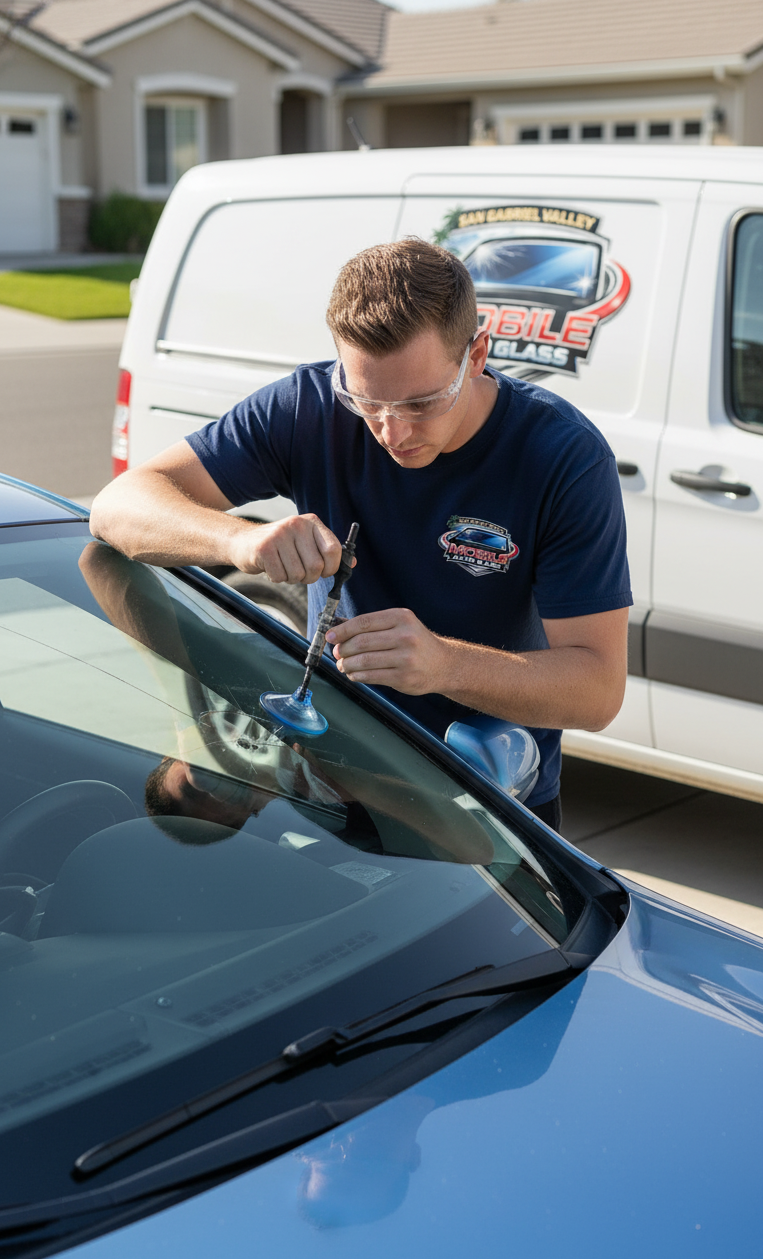
Mobile auto glass repair for windshield chips and eligible cracks, plus leak and seal corrections, wind noise fixes, and scratch repair when feasible.
Auto glass repair stabilizes windshield chips, eligible cracks, leaks, seal issues, wind noise causes, and scratches when feasible to improve safety, comfort, and clarity.
San Gabriel Valley Mobile Auto Glass delivers mobile service with inspection based recommendations, photo friendly quoting, and clear expectations before work begins.
Auto glass repairability depends on measurable factors. We use these to decide if chip repair or crack repair is appropriate.
The diameter of the damaged area is one of the first factors we measure to determine if repair is appropriate.
Crack length and whether the crack is stable or spreading determines repair eligibility.
Depth and penetration into the laminated windshield layers affects whether the damage can be properly repaired.
Location on the windshield, including driver line of sight considerations, affects both repairability and safety requirements.
Damage near the edge can be more likely to spread, which is factored into the repair recommendation.
Dirt or moisture in the break can reduce repair quality. We confirm repairability during the appointment and provide a clear explanation if repair is not appropriate.
We handle a range of auto glass repair needs based on inspection findings and damage type.
We repair common windshield damage when it meets repairability standards.
Common break types (inspection based): Rock chip or stone chip, Bullseye break, Star break, Combination break.
Eligible crack repair: Some small cracks may be repairable depending on length, depth, location, edge proximity, and stability. Inspection confirms eligibility.
Leaks often come from sealing problems, molding issues, or fit related gaps. We inspect the glass perimeter and surrounding components to identify the most likely leak path.
What this service can address: Water intrusion around windshield or glass edges. Seal degradation and perimeter sealing issues. Molding related gaps or fit concerns. Reseal needs after prior glass work, when applicable.
What to expect: Inspection and leak source assessment. Recommended repair approach based on the condition of seals and moldings. Clear expectations about results and limitations before work begins.
Wind noise is commonly caused by changes in fit, seals, molding condition, or airflow at the glass edge. We inspect alignment, contact points, and sealing surfaces to identify likely causes.
Common wind noise causes we check: Seal compression issues or gaps. Molding fit problems. Glass seating or edge alignment concerns. Airflow changes at the perimeter.
Outcome: The goal is to reduce wind noise by correcting the sealing or fit issue found during inspection.
Scratch repair depends on depth, location, and glass type. Some scratches can be improved, while deeper scratches may have limited results.
Scratch repair suitability depends on: Scratch depth and whether it catches a fingernail. Location in the driver viewing area. Extent and density of scratching. Safety and optical clarity considerations.
Results expectations: Scratch repair may improve appearance and visibility, but not every scratch can be fully removed. We set expectations after inspection.
When you are booking auto glass repair services, details matter. The right repair protects visibility, improves comfort, and addresses leaks and noise at the source.
We inspect first, confirm what is repairable, and explain the decision clearly.
We come to your vehicle at the scheduled appointment window.
Chips and eligible cracks, leaks and seals, wind noise corrections, and scratch repair when feasible.
You will know what results to expect for your specific issue.
We stand behind the repair performed. Ask during booking for warranty terms and limits.
If you are not sure whether the damage is repairable, send a photo for a quick review and scheduling options.
Mobile service is built for convenience and clarity. You get a scheduled time window, a professional inspection, and a focused repair process.
Choose a time that works for you. Share basic details about the issue and receive confirmation and arrival coordination.
We confirm repairability during the appointment. If repair is not appropriate, you will get a clear explanation of why before any work begins.
The technician performs the repair based on the damage type and inspection results. Time on site varies by damage type, location, and inspection results.
If conditions affect repair quality, the technician will tell you before work begins. You will know what results to expect for your specific issue.
Understanding what auto glass repair achieves, how we approach repair decisions, and what affects the cost.
Auto glass repair is a safety focused service with realistic outcomes.
Primary goals of repair: Stabilize the damaged area to reduce the risk of spreading. Restore strength in the repaired area. Improve appearance and clarity compared to the unrepaired damage.
Visibility expectations: A repair typically reduces the appearance of the damage, but a faint mark can remain. The purpose is stabilization and improved strength in the repaired area, not cosmetic perfection.
Long term notes: Over time, repaired areas can change in visibility as the windshield ages. The repair still serves its purpose when the repair is appropriate for the damage.
San Gabriel Valley Mobile Auto Glass follows a repair first approach when repair is safe and appropriate.
What that means for you: We inspect first and recommend auto glass repair when the damage meets repairability standards. If repair is not appropriate, you receive a direct explanation based on the damage factors.
The goal is the right outcome for safety and function. Replacement is only discussed as an inspection outcome when repair is not viable.
Auto glass repair cost depends on the service type, the condition found during inspection, and how much work is needed to produce a reliable result.
What affects pricing: Service type (chip repair, crack repair eligibility, leak and seal work, wind noise correction, scratch repair). Number of repair points and overall complexity. Accessibility and time on site. Condition of seals and moldings.
Best way to get an accurate quote: Send a photo or describe the issue. We will confirm the recommended service and provide pricing based on the work needed.
Common questions about auto glass repair eligibility, timing, service types, and what to expect.
Auto glass repair can include chip repair, crack repair, leak sealing, wind noise fixes, and scratch repair when eligible. Service depends on the damage and inspection results.
Chip or crack repair depends on size, depth, location, edge distance, and whether the damage is spreading. Inspection confirms if repair is safe.
Mobile auto glass repair usually takes 30 to 60 minutes for chip repairs. Leak, seal, or wind noise repairs can take longer.
No. Auto glass repair improves strength, function, and clarity, but a faint mark can remain. Scratch repair results depend on depth and location.
Yes. We inspect the glass perimeter and seals to find the leak source, then recommend the correct sealing or molding repair.
Wind noise is often caused by seal gaps, loose molding, poor alignment, or airflow changes at the glass edge. Inspection identifies the likely cause.
Mobile service availability and cost depend on the job type and scheduling. Quote details confirm whether mobile service is included.
Yes, workmanship warranty terms may be available depending on the repair type. Ask for warranty details during booking.
Auto glass repair cost depends on the service type, number of repair areas, damage severity, and time on site. Photos and vehicle details help confirm pricing.
Getting started is simple: send photos of the damage and your vehicle details for a fast quote. We confirm the repair type, set expectations, and book an appointment window that works for you.